
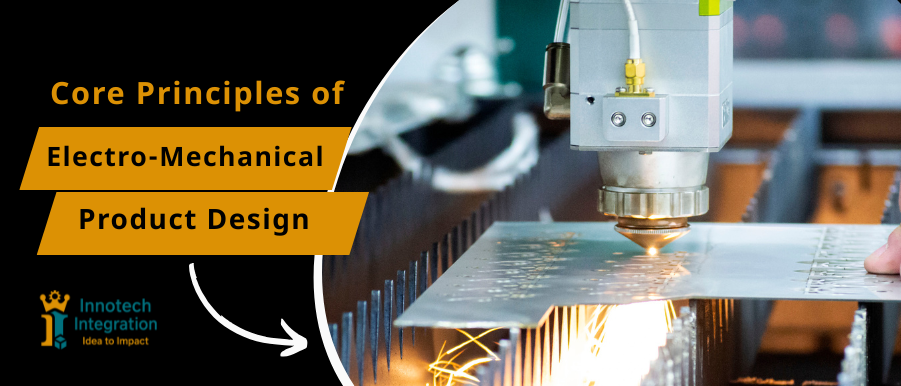
In the age of smart devices, automation, and interconnected systems, Electro-Mechanical Product Design (EMPD) has become the bedrock of innovation. This discipline focuses on the design of products that incorporate both electrical and mechanical components, where the functionality of the device relies entirely on the successful interplay between the two. Think of any modern consumer or industrial product—a robotic arm, a 3D printer, a complex medical device, or even a sophisticated coffee machine. Each of these is an electromechanical system.
The importance of EMPD in the modern product space cannot be overstated. It moves beyond traditional mechanical engineering to integrate electrical control, sensing, and actuation directly into the physical structure. A successful EMPD process ensures a product is not only structurally sound and aesthetically pleasing, but also electrically efficient, functionally reliable, and ready for the complex software and firmware that will bring it to life. A holistic, integrated design approach is essential to avoid costly issues later in development.
Understanding Electro-Mechanical Product Design
Electro-Mechanical Product Design is a multi-stage process that balances the physical needs of the device with its electronic control system.
- Mechanical Design: This focuses on the physical structure, chassis, enclosure, moving parts (gears, bearings, linkages), material selection, and thermal management. The goal is to ensure durability, ergonomics, manufacturability, and proper heat dissipation.
- Electrical Design: This involves the specification and integration of the power system, sensors, actuators (motors, solenoids), wiring harnesses, and the overall electrical architecture. It ensures components receive the correct voltage and current without failure.
- Circuit Board Design (PCB): The Printed Circuit Board is the physical substrate that houses the electronic components (microcontrollers, memory, connectors). Good PCB design is critical for signal integrity, minimizing electromagnetic interference (EMI), and ensuring the board physically fits within the mechanical enclosure.
The central concept in EMPD is co-design. The electrical and mechanical aspects are fundamentally interdependent:
- The mechanical enclosure must provide adequate mounting points, shock absorption, and protection for the sensitive electronics (e.g., ensuring a PCB doesn’t flex or overheat).
- The selection of actuators (e.g., a stepper motor) and sensors (e.g., an optical encoder) determines the mechanical movement capabilities, which, in turn, dictates the power requirements and the complexity of the control circuitry.
A design decision made by one team often has significant ramifications for the other. For instance, reducing the size of the enclosure (mechanical) immediately limits the area available for the battery and heat sink (electrical), potentially leading to performance compromises.
The Value of Professional, Integrated Expertise
The true complexity of modern product development lies in the digital intelligence layered upon the physical hardware. Success requires integrating the EMPD foundation with expert-level software and firmware engineering.
1. Firmware as the Hardware’s Interpreter
Firmware is the low-level code that resides directly on the device’s microcontroller or processor. It’s the essential bridge between the physical world and the digital commands.
- Scenario Example (Smart Lock): The mechanical assembly must be strong enough to withstand force. The electrical system consists of a motor (actuator) and door status sensors. The firmware is the critical element that translates the command “Unlock Door” (received from a phone app) into precise motor movements. It manages the motor’s speed, current draw, and ensures the system operates within defined power limits set by the electrical design. Without integrated expertise, the motor might burn out due to poorly regulated firmware control.
2. Software for Seamless User Interaction
Software—often in the form of a cloud service or mobile application—provides the user interface and high-level logic. It relies entirely on the stable performance dictated by the electro-mechanical design and firmware.
- Benefit: Over-the-Air (OTA) Updates: An integrated design anticipates future needs. The EMPD team ensures the microcontroller and memory are correctly sized (hardware) and that the firmware is architected (software) to safely receive and apply remote updates. This future-proofs the product, allowing for bug fixes and feature additions post-launch without costly recalls.
3. Design for Excellence (DFX)
Professional integration enforces critical design practices that save time and money:
- Design for Manufacturability (DFM): Expert teams select off-the-shelf components, standardize fasteners, and optimize PCB layout to simplify assembly and testing on the factory floor, thereby significantly reducing the Cost of Goods Sold (COGS).
- Thermal and Stress Analysis: Utilizing advanced simulation tools, integrated teams can model the thermal performance of the electronics within the mechanical enclosure. This prevents catastrophic failures and extends product lifespan—a crucial reliability factor.
Your Partner for Electromechanical Products
Electro-Mechanical Product Design is the discipline of making things work in the real world. It’s a synthesis of structural integrity, electrical reliability, and digital intelligence. The best products emerge not from segregated departments, but from a unified team where software, firmware, and electro-mechanical experts collaborate from the initial sketch.
Innotech Integration has vast expertise in product development for the electromechanical manufacturing sector. By embracing this integrated, multidisciplinary approach, your development teams can avoid late-stage design flaws, optimize performance, and achieve efficient manufacturing scale. Professional design and integration services provide the crucial link, transforming innovative concepts into robust, reliable, and commercially successful products ready for the complexities of the modern market.

